The Adversary Was Watching While Washington Hesitated
Ports moved. Airports boarded. Threat streams flowed. But behind the illusion of stability, America’s security system was operating with less margin, just as adversaries were probing for weakness.

America did not experience a normal political funding dispute.
America experienced a live-fire stress test of how much degradation its homeland security architecture could absorb before the public noticed.
That distinction matters.
Because adversaries do not attack systems when they are visibly collapsing.
They attack them when leadership mistakes endurance for resilience.
For weeks, America’s security infrastructure operated in a dangerous state between functional and strained. Not broken enough to trigger panic. Not stable enough to guarantee margin.
And margin is where security lives.
The public saw continuity.
The professionals inside the system saw fatigue, pressure, delayed decisions, staffing strain, operational backlog, reduced flexibility, and silent accumulation of risk.
The adversary saw an opportunity.
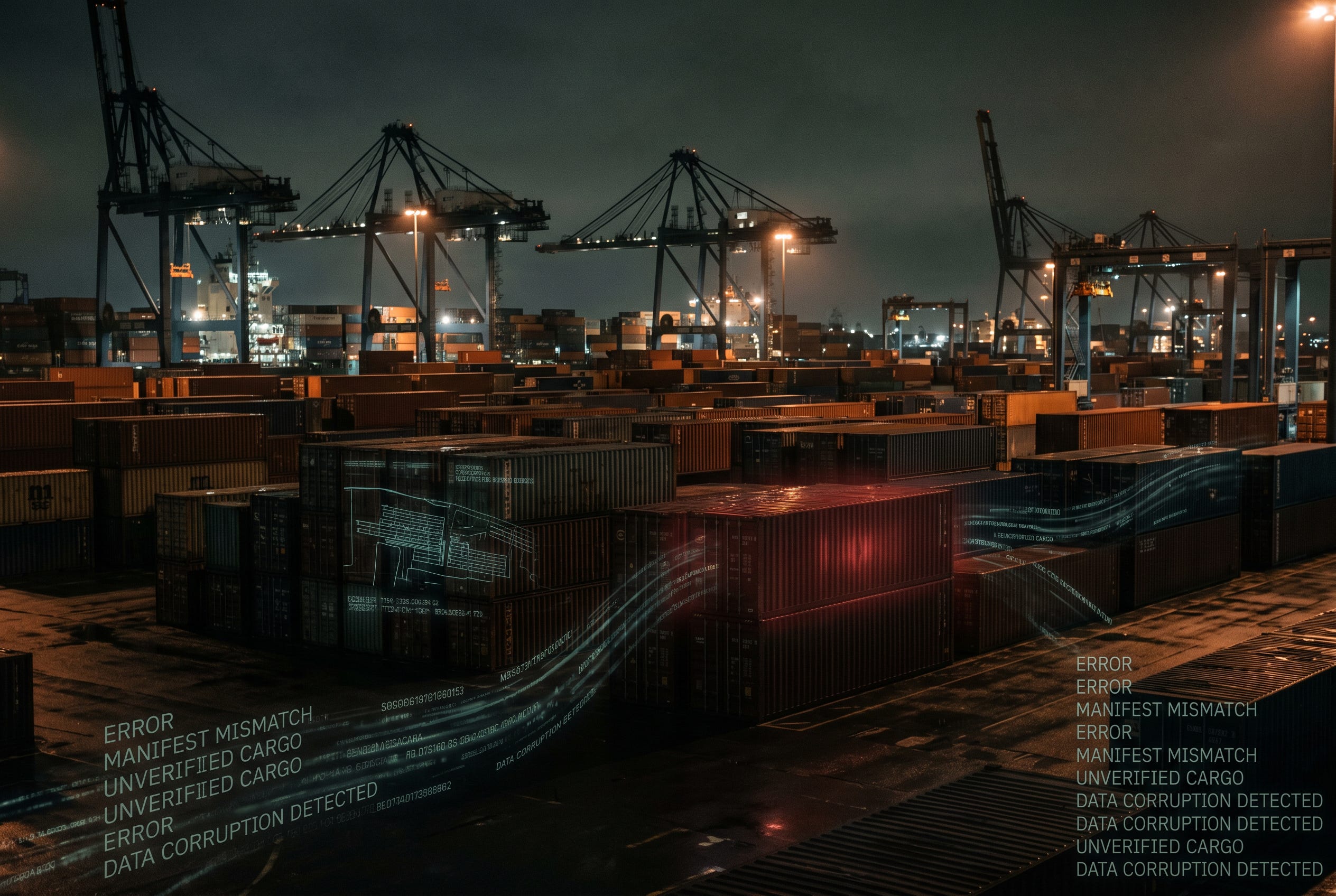
Ports Never Stop Moving. Neither Does Exposure.
Cargo does not wait for Congress.
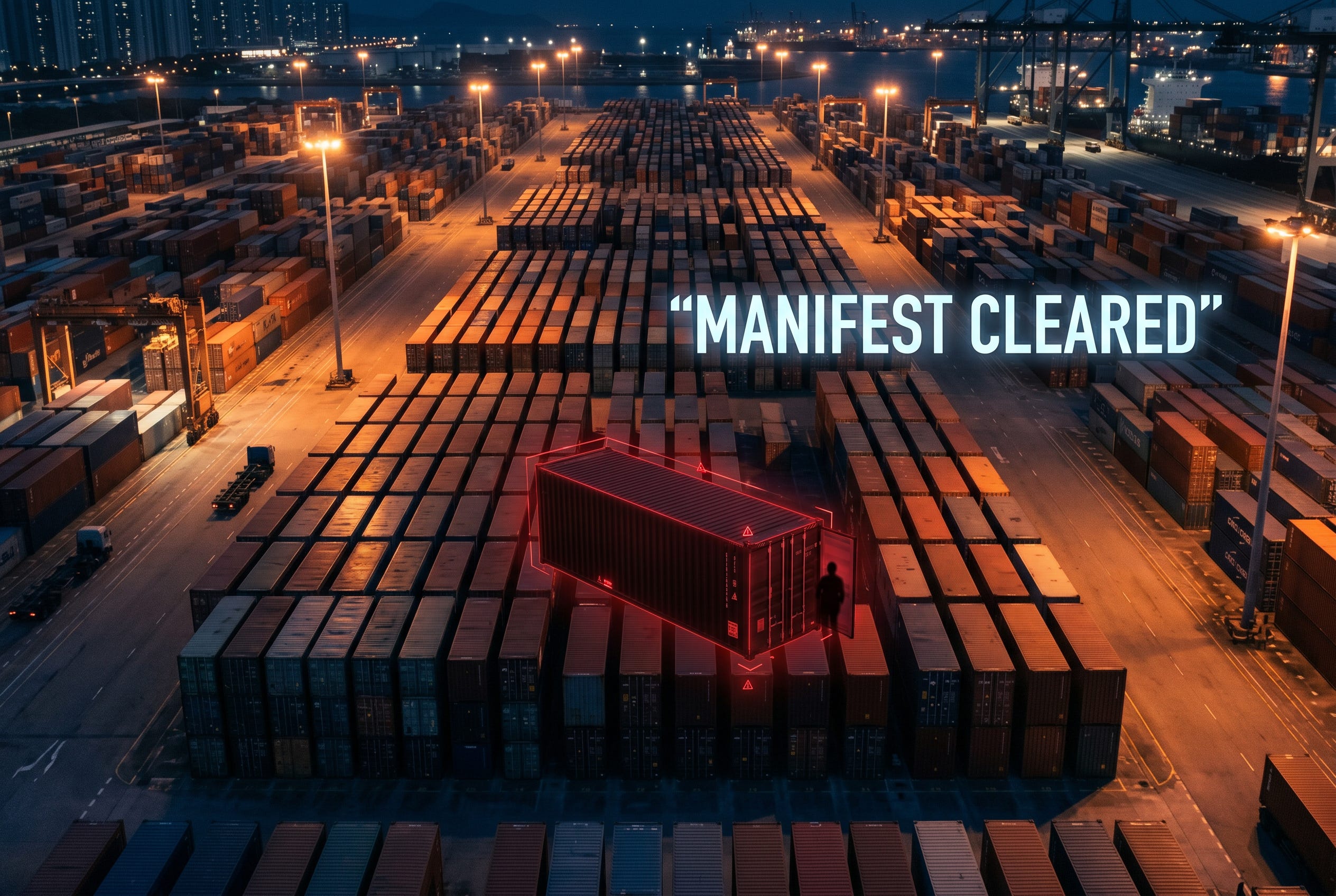
Ships still crossed the ocean. Containers still arrived by the thousands. Manifests still cleared. Cranes still moved cargo into the bloodstream of the American economy.
But homeland security is not just about movement.
It is about judgment under pressure.
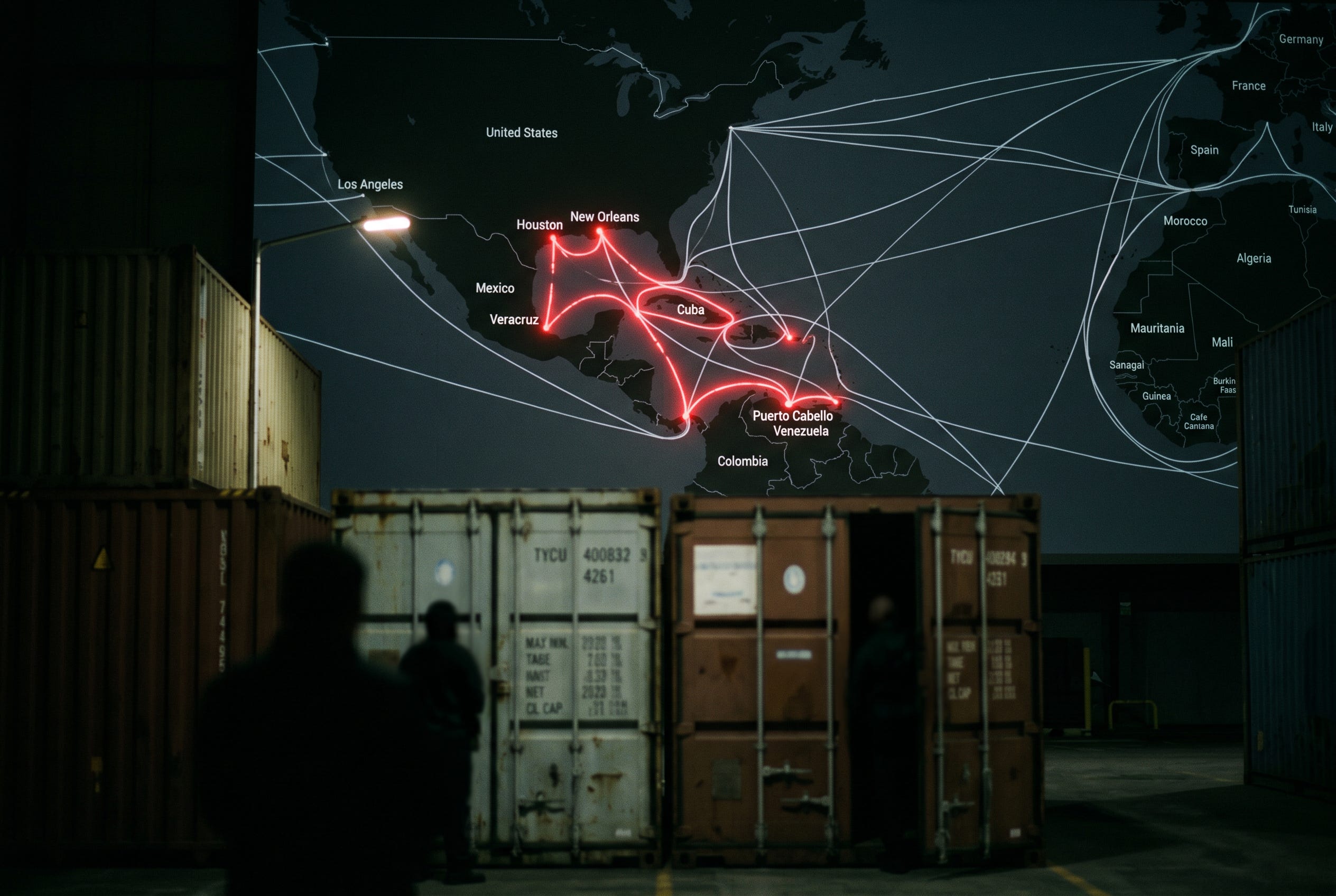
CBP officers and targeting systems are in place to identify shipments that should not be there. The contaminated cargo. The trafficked human beings. The fentanyl precursor chemicals. The sanctioned goods. The manipulated manifests. The weapon hidden inside a trusted supply chain.
Most containers entering the United States are legitimate.
That is exactly what makes ports dangerous.
Because security systems under stress begin trusting normality faster than they verify anomalies.
And modern adversaries understand something most civilians never think about:
You do not need to compromise an entire port.
You only need one container to move through unnoticed.
One compromised shipment can become a narcotics pipeline.
One manipulated bill of lading can become sanctions evasion.
One hidden radiological component can become national panic.
One corrupted logistics pathway can disrupt supply chains across multiple states.
Ports are where commerce pressures security to move faster.
And when operational margin gets thinner, risk compounds quietly.
Not dramatically.
Silently.
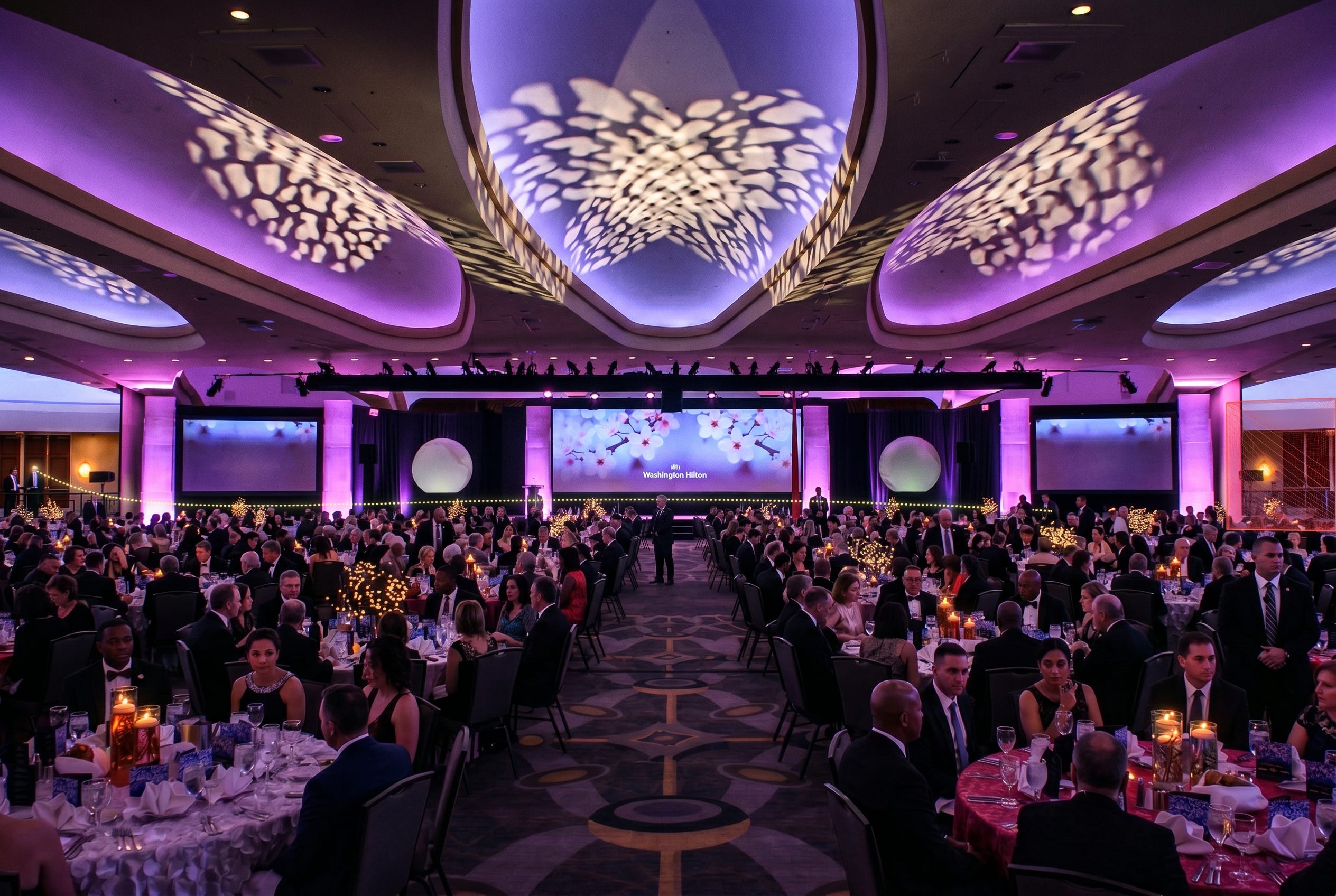
The Assassination Attempt Changed More Than Politics
The public witnessed something many Americans subconsciously believed was nearly impossible.
The echo of a bullet being fired reached the stage.
The assassination attempt against President Trump shattered more than physical security assumptions. It damaged psychological confidence in the invisible protective architecture Americans assume exists around national leadership.
For decades, people believed there was always another layer. Another perimeter. Another intelligence stream. Another surveillance team. Another contingency.
Then Americans watched failure occur in real time.
Subsequent investigations pointed toward preventable breakdowns. Communication failures. Fragmented coordination. Denied resource requests. Operational gaps.
Not one catastrophic collapse.
Something more dangerous.
Accumulated degradation.
No credible security professional can honestly claim funding strain alone caused the assassination attempt.
But no serious protective intelligence professional can deny the impact prolonged operational pressure, burnout, staffing shortages, fatigue, morale erosion, resource limitations, and normalized stress have on protective ecosystems.
Security failures rarely begin at the moment of attack.
They begin months earlier when organizations slowly normalize operating under strain.
The most dangerous phrase in security is not:
“We are failing.”
It is:
“We are managing.”
Because that is often the exact moment systems begin absorbing risk they were never designed to carry indefinitely.
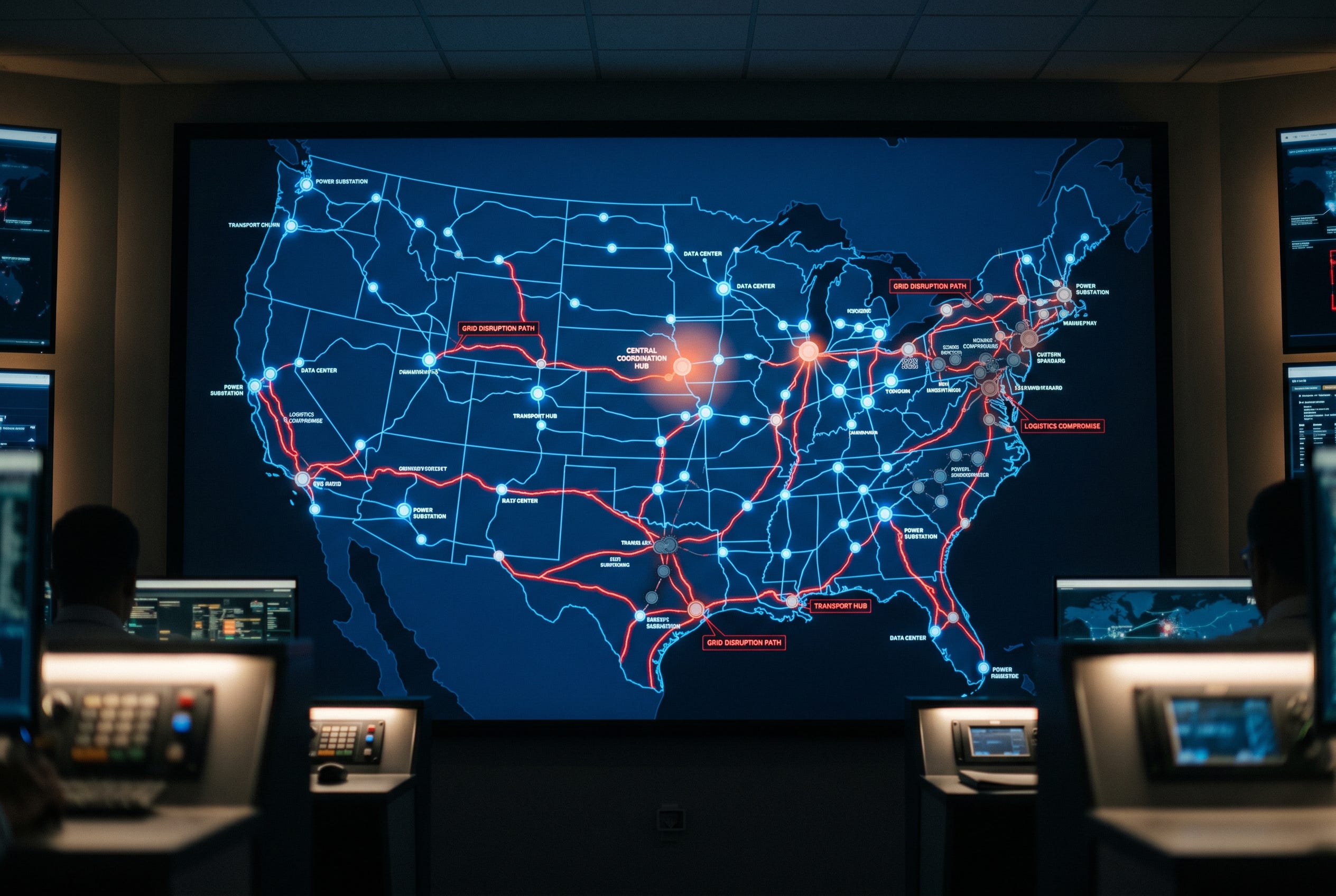
Cybersecurity Does Not Collapse Loudly
Cyber defense rarely fails in dramatic fashion.
It slows first.
Threat intelligence takes longer to move. Vulnerability assessments happen less frequently. Coordination between federal agencies and private infrastructure operators weakens. Analysts become overloaded. Critical infrastructure visibility begins to fragment.
Nothing looks catastrophic in isolation.
That is why it is dangerous.
CISA’s role is not simply to respond to attacks.
Its role is to connect patterns before separate incidents become systemic compromise.
When cyber defense loses speed, adversaries gain maneuvering room.
And adversaries today are patient.
Chinese cyber operations continue targeting critical infrastructure, telecommunications, logistics, maritime ecosystems, and industrial systems. Iranian-linked threat actors continue probing American systems through asymmetric operations. Criminal organizations increasingly operate with nation-state sophistication.
The modern attacker does not need immediate success.
They need a delay.
A delayed patch.
A delayed assessment.
A delayed escalation.
A delayed warning.
Cybersecurity failures often begin as timing advantages.
And America handed timing advantages to its adversaries while political leaders debated the leverage of funding.
Cartels, Traffickers, and Hybrid Threat Networks Never Pause
There is a dangerous misconception that agencies like HSI exist in a separate conversation from national security.
That misconception is politically convenient.
It is also strategically false.
The same networks trafficking narcotics are trafficking people. The same logistics pathways moving fentanyl are moving illicit money, weapons, counterfeit goods, and exploitation networks.
Modern cartels no longer resemble traditional criminal organizations.
They resemble decentralized intelligence and logistics networks.
They use encrypted communications.
Drone surveillance.
Layered supply chains.
Distributed finance.
Cyber capability.
Operational compartmentalization.
While Washington debated budgets, these organizations continued adapting in real time.
Because transnational criminal networks do not care whether America is politically divided.
They only care whether pressure on their operations weakens long enough to expand movement.
Every delayed investigation creates breathing room.
Every operational slowdown creates opportunity.
Every strained agency creates exploitable seams.
The Ocean Absorbs Pressure Until It Doesn’t
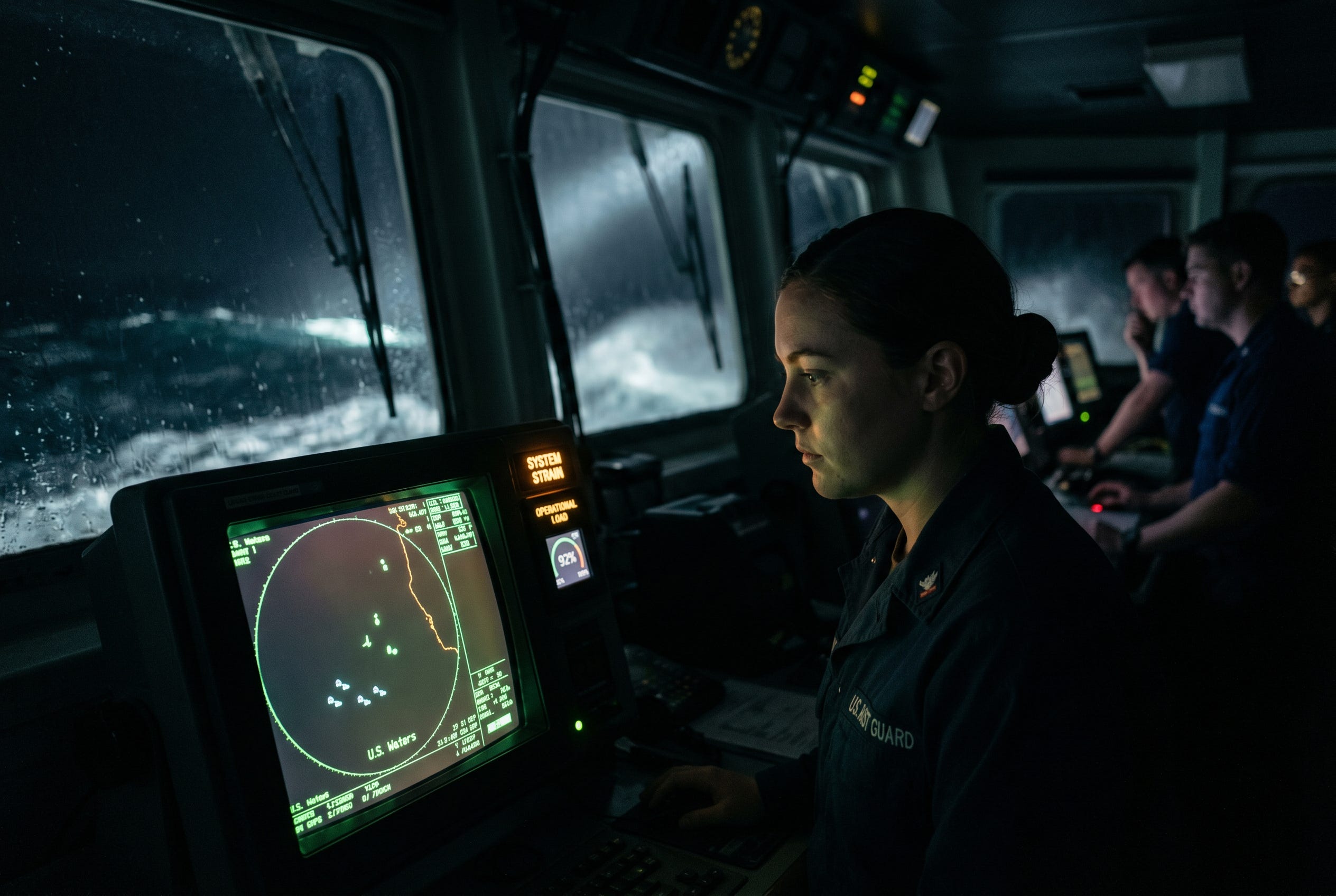
The Coast Guard may be the most underappreciated layer in America’s security architecture.
Because maritime systems rarely fail dramatically at first.
They strain quietly.
Credential backlogs increase. Operational fatigue compounds. Staffing pressure grows. Mission tempo stretches. Maintenance delays accumulate. Response flexibility narrows.
Everything still appears functional.
Until one day it isn’t.
The Coast Guard is not merely ships at sea.
It is maritime domain awareness.
Port security enforcement.
Search and rescue.
Credentialing.
Counter-narcotics operations.
Waterway security.
Critical infrastructure protection.
When maritime systems weaken, consequences spread far beyond the ocean.
Supply chains slow.
Ports become congested.
Economic pressure builds.
Operational errors increase.
The ocean does not warn you when pressure is accumulating.
It simply keeps carrying it.
Until failure surfaces all at once.
Iran, Venezuela, and the External Pressure Layer
America is no longer operating in a low-threat environment.
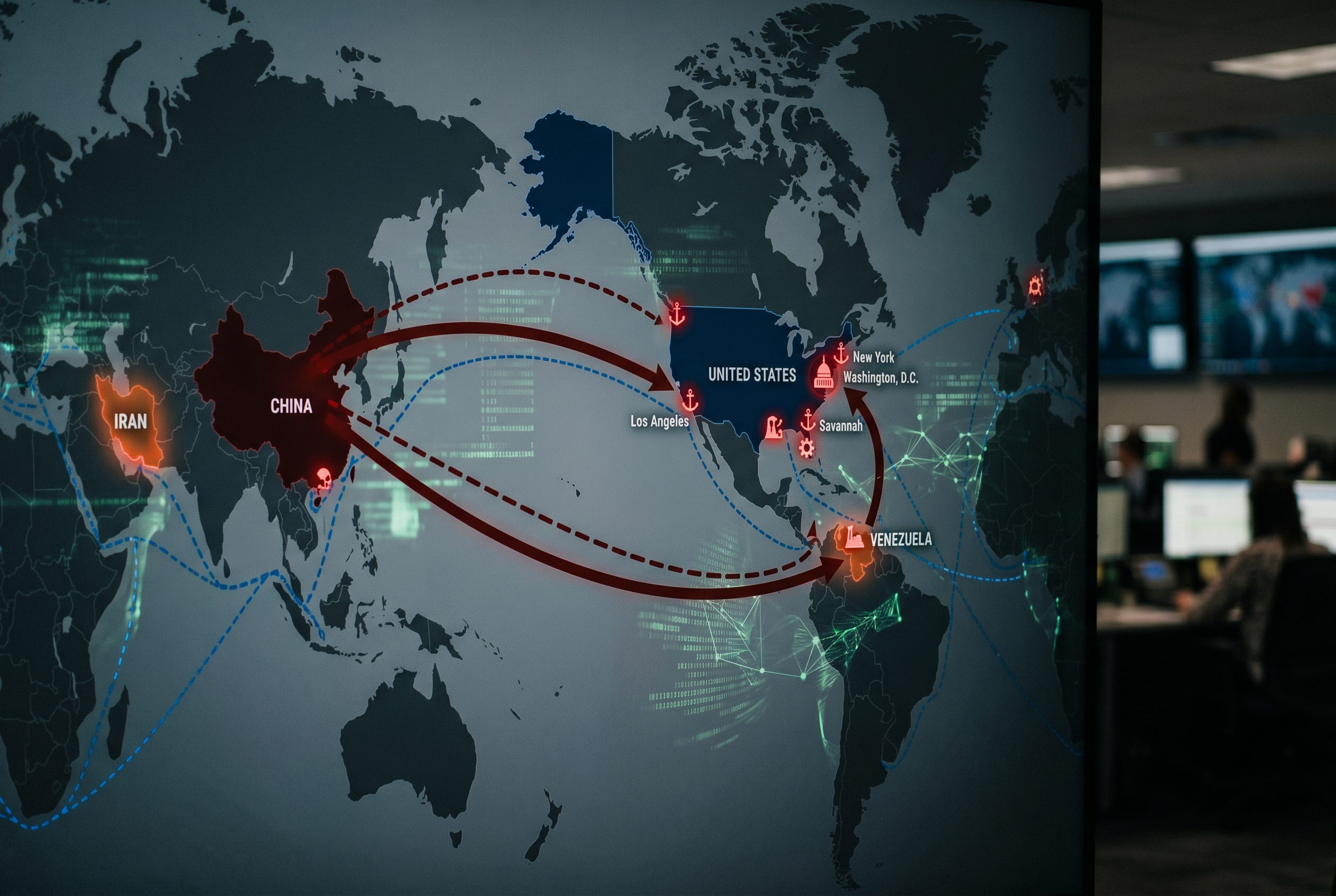
Iran-linked threat actors continue testing the boundaries of asymmetric warfare through cyber operations, proxy networks, influence campaigns, and assassination-related plotting.
Venezuela remains deeply connected to illicit finance, narcotics movement, migration pressure, and destabilized regional logistics pathways.
China continues pursuing strategic cyber positioning against American infrastructure.
These are not isolated geopolitical issues.
They intersect directly with:
Ports.
Supply chains.
Critical infrastructure.
Transportation systems.
Communications networks.
Leadership continuity.
And at the exact moment external pressure intensified, America forced its own protective systems into political uncertainty.
No adversary could have designed that scenario better themselves.
The Most Dangerous Illusion
The public believes resilience means the system is strong.
That is not always true.
Sometimes resilience simply means that the people within the system are absorbing unsustainable levels of pressure to prevent a visible collapse.
The TSA officer still showed up.
The Coast Guard watchstander still stood the watch.
The CBP officer still processed cargo.
The analyst continued to monitor the threat stream.
The agent still protected the principal.
So America assumed the system was stable.
It was not stable.
It was surviving.
And there is a profound difference between systems designed to survive pressure and systems forced to normalize degradation.
Because normalized degradation is how civilizations drift into vulnerability without realizing it.
The Asymmetric Insight
Security does not fail at the moment of attack.
It fails long before that.
It fails when institutions normalize fatigue.
When coordination weakens.
When warning systems slow.
When operational pressure becomes routine.
When delayed funding becomes expected.
When degraded conditions become politically acceptable.
Adversaries understand this deeply.
Modern threats rarely attack strength directly.
They probe for exhaustion.
And for weeks, America revealed exactly how much exhaustion its homeland security architecture could absorb before the public began asking questions.
Final Thought
Congress believed homeland security could continue operating amid uncertainty because the people within the system would continue to carry the burden no matter what.
They were right.
That is what makes this so dangerous.
Because every time America forces its protective architecture to operate under prolonged stress, staffing fatigue, delayed funding, political uncertainty, and reduced operational margin, it teaches adversaries something invaluable:
Exactly how tired the system is before it starts missing things.
And modern adversaries do not need America to collapse.
They only need America distracted, fragmented, politically exhausted, and just tired enough to hesitate.
.:MINDSET DETERMINES OUTCOME:.